

It’s his first day on the job.
In the 1970s, there is no Google, no AI, no smartphone to search things up. The only real way to really learn something is through on-the-job training.
The thing is, Rob is qualified. He has passed the test, done all the training and jumped through all of the hoops to become a New York police officer.
But luck would have it that on his first day patrolling the town with his partner, they are called to attend to a man on the roof.
He’s going to jump.
They got the radio. The siren’s blazing. They arrive in a heartbeat.
Jason, the veteran cop, turns to the rookie and says, “You got this.”
“What?!” exclaims Rob.
“Take care of this,” Jason says with a wink.
“But what am I supposed to do?”
“No better way to learn than getting your hands dirty, buddy.”
They run up the stairs. Rob’s mind is racing faster than his feet.
When they get to the roof, Jason signals to Rob to ‘go on.’ Rob has no idea what to say, or what to do. So he goes the soft way.
“Come on, pal. I’m sure we can talk it through.” says Rob, looking to Jason for some help.
“Talk? Talk is cheap,” says the man.
NO help is gonna come from his partner. This is not on-the-job-training. This on-the-job-punishment for the rookie.
“DO NOT come any closer. If you come any closer, I’d jump!”
This is going nowhere. Rob is feeling the heat.
“Come on buddy…”
“NO!”
“Come on…”
“NO!”
“Come…”
“NOOO…”
For whatever reason, maybe it’s the summer blaze, the onlooking gaze of the veteran cop, the feeling of stupidity of not knowing what to do—or maybe its plain dehydration after two hours in the sun—Rob snaps. He yells,
“STOP OR I’D SHOOT!!”
Everything grinds to a halt.
Jason stops chewing his gum. Rob stops breathing. Even the pigeons seem to stop in mid-flight.
The man on the ledge looks at the rookie cop, in shock, raises his hands and says, “Wooohh… Ok, Ok…” as he walks towards them.
Rob’s hands are stiff frozen. He’s shocked that his gun is pointing at the man that he was trying to save from killing himself. He doesn’t move. Jason takes over and helps the man to safety. From the ledge, and from Rob.
Citizen saved.
Word got around. Rob becomes famous in the precinct. The rookie who saved a suicidal man. Everyone was trying to learn the method of exactly what Rob said, how he said it, what sort of stance he had while holding the pistol (wait… was the pistol loaded?), etc.
And of course, this does not scale. Others tried to no effect whatsoever. Maybe he said it this way, or maybe he held the gun that way…
Against Formula
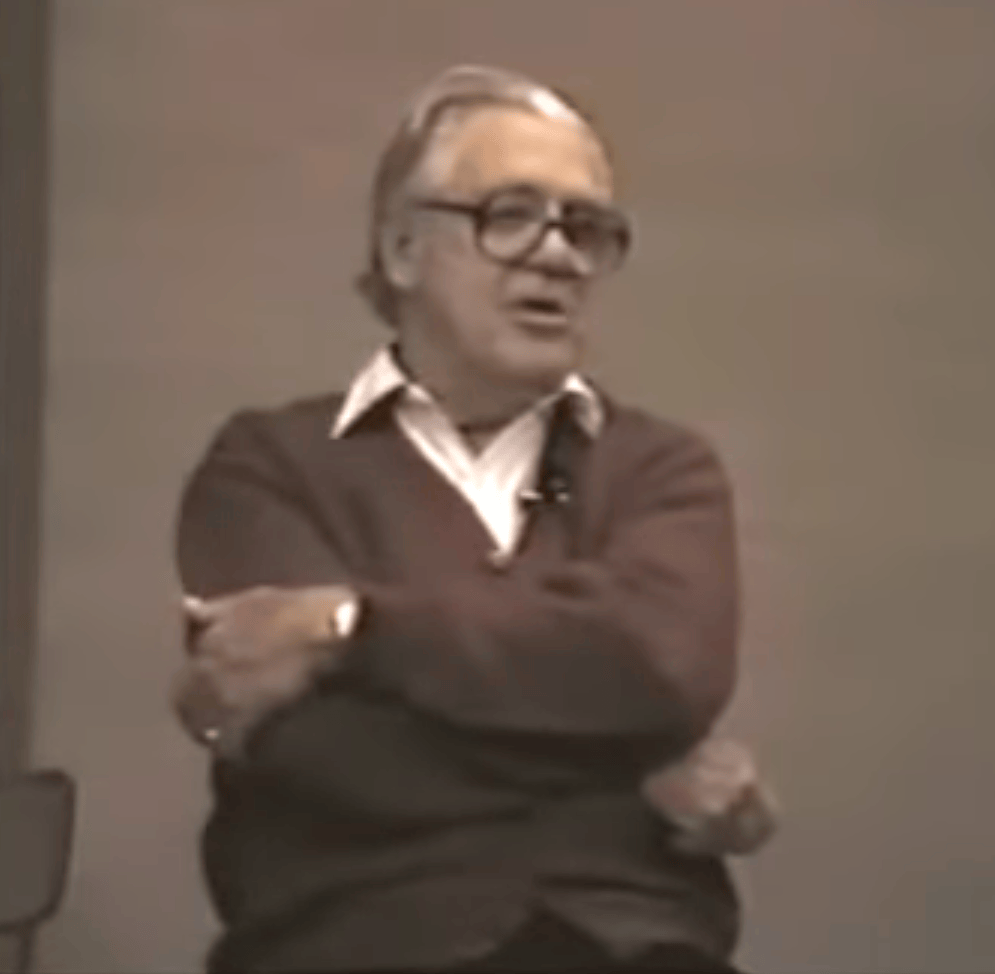
I heard this story by the great family therapist Carl Whitaker.1 Known for his radical and unexpected ways to disrupt dysfunction in the family interaction pattern, Whitaker was trying to make a point that we chase the magic away when we chase for formulas.
Formulas speak to our want for certainty. A + B = C
We even joke about this. “If only our kids came with an instruction manual.”
To be fair, we are dealing with a great deal of uncertainty in life. Wouldn’t it be wonderful if you need not worry about the future? Wouldn’t it be great if you can be certain your kids are safe at all times? Wouldn’t it be nice if you knew for sure that if you did X for your client with Y problem and it will lead to a good outcome?
Best known for his philosophy of dialogue and his book I and Thou, Austrian-Israeli philosopher Martin Buber has this to say about formulas:
I do not accept any absolute formulas for living. No preconceived code can see ahead to everything that can happen in a man’s life. As we live, we grow and our beliefs change. They must change. [emphasis mine] So I think we should live with this constant discovery. We should be open to this adventure in heightened awareness of living. We should stake our whole existence on our willingness to explore and experience.
But the temptation for formula is real.
A colleague told me that in her organisation, they have a Gratitude Tuesday exercise. Each Tuesday, each team member has to say what they are grateful for each week. My colleague cringes at the idea. Others seem to enjoy the roundtable gratitude exercise. Besides, what’s not to like, especially since the evidence suggests that gratitude journalling is beneficial for your mental health.
The trouble is, we seem to conflate our yearning for form and replace it with formula.
I’m now thinking about a laughing guru I saw on television a few nights ago. In his class, this Guruji teaches disciples to laugh on demand. They make funny sounds “Ho Ho Ho…” “Yippie Ya Yeah” until a laughter breaks. The class is in a laughing fit.
I am not against gratitude or laughing. I am against formula.
Formula is the recipe that kills discovery.
You should pay such close attention to the life around you that it leads you to be filled with gratitude. You should have such levity and lightness that it leads you to smile and laugh at absurdity of everyday life.
Formula scares the soul away.
The Antidotes
How do we invite the soul and not bruise and frighten them away with our formulaic attempts?
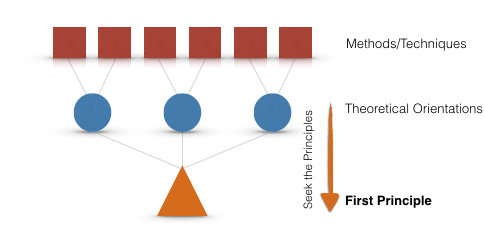
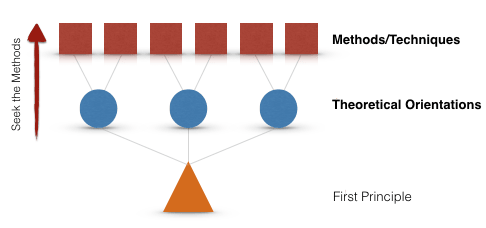
First, what we need is not just techniques, tips and tricks, but guiding principles of thought and action that can help us.
We don’t need to give up hope and give in to learn yet another new method. We can resist the urge of a false promise.
How? We need to develop sound first principles.
First Principles
Principles are deeper than techniques. Principles produce an array of techniques in an instant.
Here’s what Ralph Emerson has to say on this.
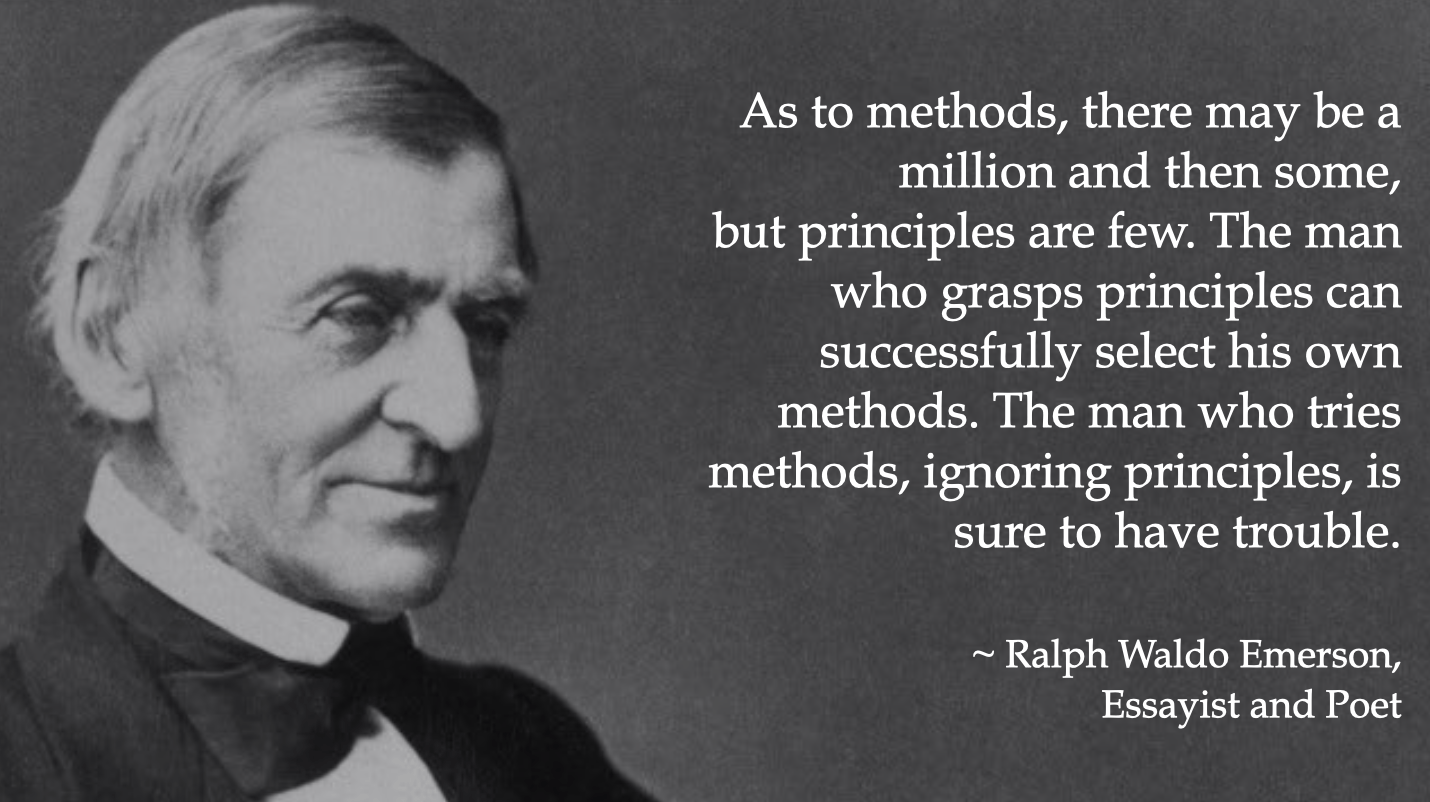
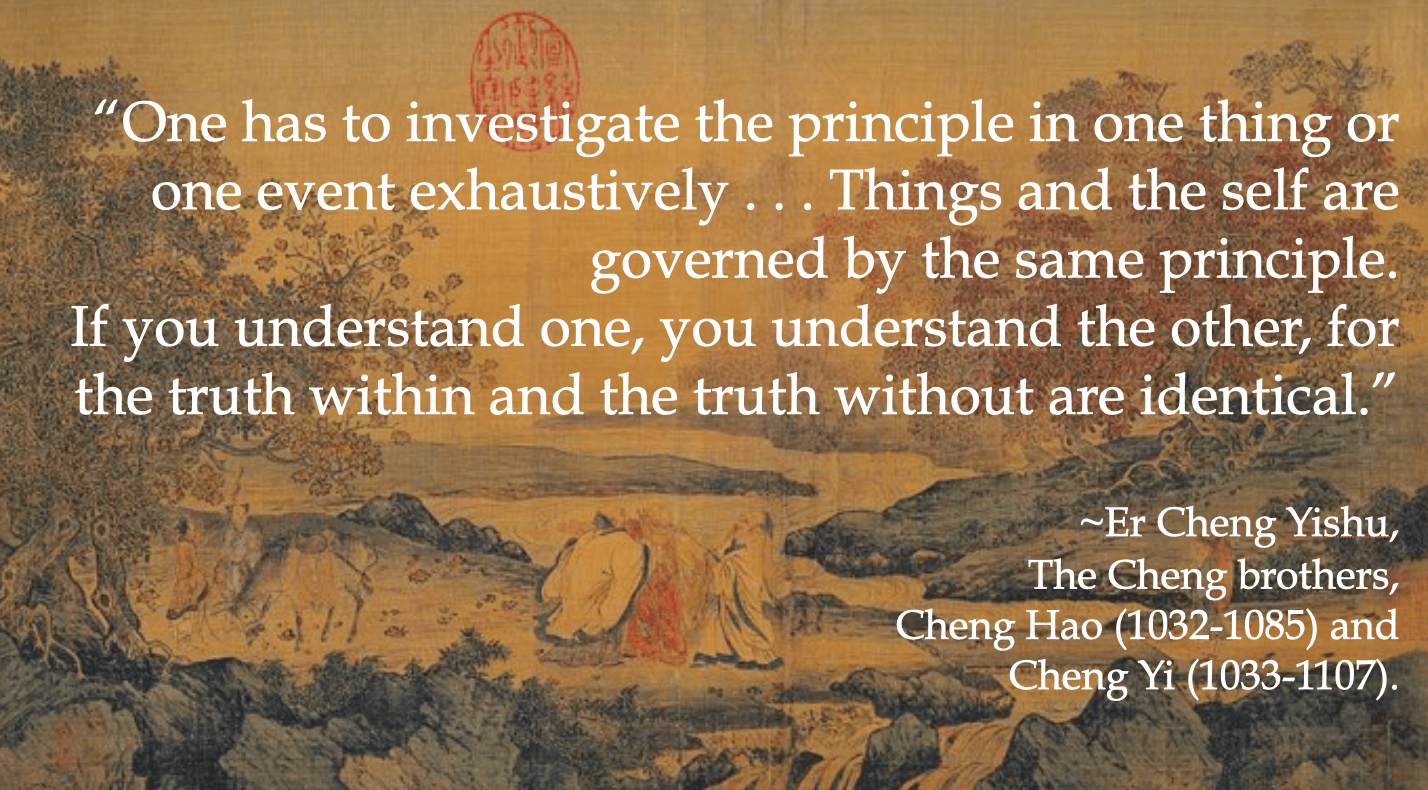
Or take it from the 11th century neo-Confucian philosophers, Cheng Hao and Chen Yi:
Since we are grafting from the East, it’s worth remembering Bruce Lee, who said that any technique, however useful and desirable, becomes a disease of the mind when we obsess with it.
Theories vs. Principles
We have a tendency to conflate theories with principles:
Theories explain.
Principles guide.
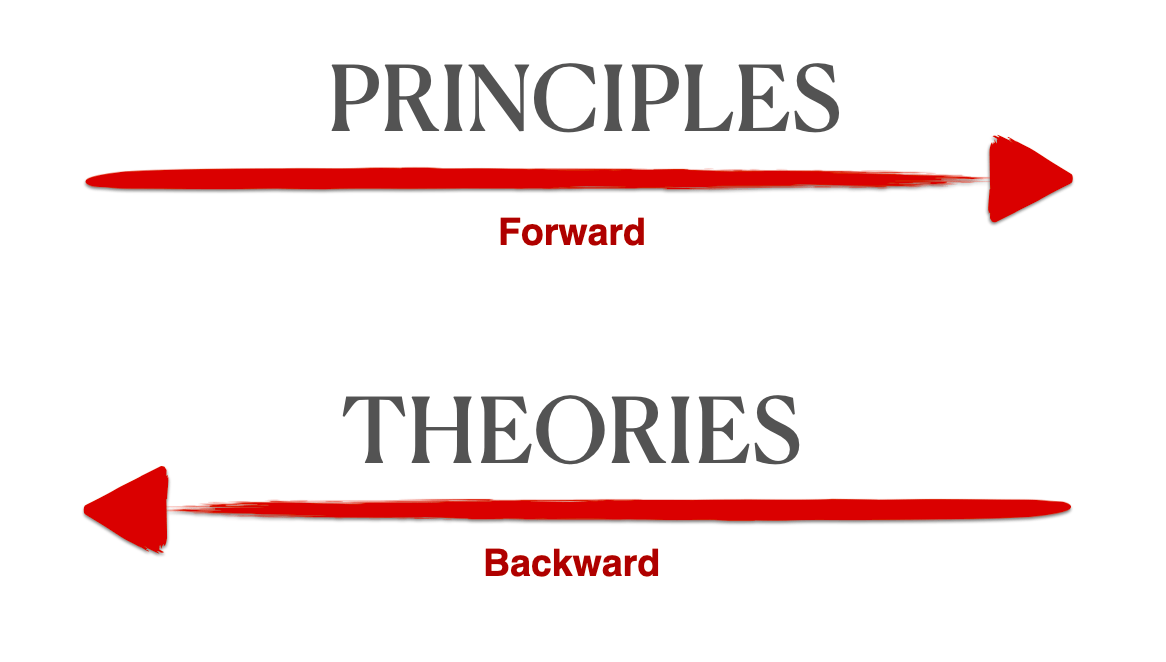
Theories help you understand based on what is patterns are known in the past.
Theories are descriptive.
Principles, on the other hand, act like a compass on where you should go and what you should do next.
Principles are prescriptive.
If we are too theory-obsessed, we are prone to become explanaholics i.e., spending too much time making a theory out of everything based on retrospect.
Instead, I’m arguing for developing a principles-first approach, rather than a methods approach.
SEE RELATED:

Form
The second antidote to formula is to address what various schools of therapeutic models provide: Structure.
Instead of formula, we need a form.
We can learn how to develop form in what we do.
Form means that we need to know how to structure and scaffold our sessions. This does not eradicate uncertainty from the therapy session. Neither does it guarantee success. When we know what it takes to ‘form’ meaningful experiences for our clients, beyond specific techniques, tips and tricks, we then have a fighting chance to help reliably with different clients, and not succumb to a narrow and specific ‘Stop or I’d shoot’ approach.
SEE RELATED
Why Structure Your Sessions

I’ve listened to hundreds of hours of therapy sessions. When sessions lack impact, a handful of reasons are at play. But at its foundation, it is often contributed by the lack of one key feature:
Your Frontier
Therein lies the frontier ahead of us, if we want to avoid a formulaic approach.
A cookbook recipe might be something you start with, not what you end with.
It doesn’t mean you should go into a session totally underprepared. Far from it. It means we should no longer just “play it safe.” It means we are going to the edges and taking therapeutic risks.
In these edge states, first, we are not pushing for change, but seeking to be changed. We are no longer in fix-mode, but in play-mode. We leave the idea of ‘doing things right’ behind, and zoom in on doing the right thing. We let go of the urge for manualisation and focus on the utilisation of everything that your client—and you— would bring to the table.
We put down the menu, and cook up a meal.
FURTHER READINGS


Notice Board
Apologies for the long list of notices. Quite a bit to pin on the board.
I’d be speaking at the 2025 National Conference: Optimising Clinical Skills in a Rapidly Changing World. This will happen on the 14th and 15th of Nov 2025, Sydney, Australia.
Topics covered:
a. Talk: Ways Forward and Backwards with Deliberate Practice: A Manifesto for Deep Learning and Improvement of Care and
b. A 1/2 day workshop on Reigniting Supervision: A Tale of Two worlds in Developing Expertise.
You can join in-person and online. If you are there, please come and say Hi! I would love to hang out with you.Thanks to the people at Psykoterapi Centrium in Sweden for inviting me to their conference last week. I hope the audience likes the gift!
Thanks to Kellie Cassidy and team at our local private practice Prosper Health Collective for inviting me back to run a workshop. I’m impressed with the steps you have taken to get here since we last met!
DP Cafe: Scott Miller and I are so revved up with joining folks from US, Australia, Canada, Netherlands and Serbia for our third cohort. Tickets sold out pretty quickly. If you would like to join this close community for the next cohort, drop us an email to be on the waitlist. admin@darylchow.com

Daryl Chow Ph.D. is the author of The First Kiss, co-author of Better Results, The Write to Recovery, Creating Impact, and the latest book The Field Guide to Better Results. Plus, the new book, Crossing Between Worlds.
You might be interested in my other Substack, Full Circles: Field Notes on the Inner and Outer Life. FC is a return to soul and sanity, beyond the hollow promises of self-help tips and tricks.

It’s a pity most new therapists I’ve spoken to don’t know pioneering family therapist figures like Carl Whitaker, Virginia Satir, Salvador Minuchin, or Jay Haley.